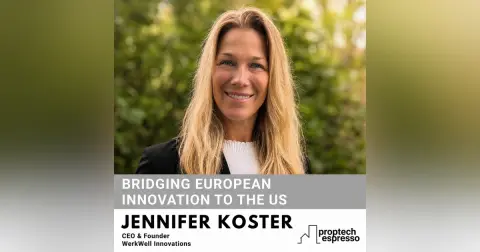
Jennifer Koster - Bridging European Innovation to the US

 Apple Podcasts
 Spotify
 Castro
 RSS Feed
 We talk with WerkWell Innovations CEO Jennifer Koster about why European innovation often struggles to commercialize in the United States and what it takes to cross the cultural, regulatory, and sales gaps. We break down practical ways to earn US buyer trust, validate technology locally, and build an ecosystem that turns introductions into real projects.
• European innovation strengths driven by R&D funding, stringent efficiency policy, and market-proven solutions
• Why selling in the US differs from selling in Europe, including the “yes culture” reality and faster clarity on buyer value
• The US as 50 different markets, with state-by-state rules, incentives, and priorities
• Common market-entry mistakes, including assuming trade missions lead to revenue and relying on detached sales agents
• Why local presence matters, including accents, perceived risk, and the need for American support in sales
• How WerkWell sources and vets companies through universities, embassies, investors, and industry partners
• What a “commercialization bridge” looks like, from coaching and positioning to pipeline building and delivery support
• Using WerkWell development projects to pilot solutions and create US-based validation
• Integrated building systems thinking, connecting design decisions to long-term operational performance
• Global Resilience and Innovation event vision across ports, data centers, cities, and critical infrastructure
Be sure to subscribe to the podcast on Apple Podcasts Google Podcasts or wherever you listen to podcasts. To learn more visit www.proptechespresso.com.
Where is this appearing?
00:00 - Welcome And Host Setup
00:18 - What WorkWell Actually Does
01:42 - Why Europe Produces So Much Innovation
06:06 - The Biggest US Market Misconceptions
08:40 - Why Trade Missions Stall Out
13:30 - How WorkWell Finds The Right Companies
16:15 - The Commercialization Bridge Explained
19:17 - Using Development Projects To Validate
24:02 - Designing Buildings As A Whole System
34:50 - Global Resilience And Innovation Event
40:11 - Five-Year Vision And How To Reach Jennifer
42:54 - Closing And Subscribe
Welcome And Host Setup
Speaker 1
Welcome to Prop tech Espresso . My name is Mark Hurst, former investment banker, and serial startup junkie and real estate technologist. On each 15 to 20 minute episode, you'll hear from leading entrepreneurs on your experts on the opportunities and challenges of the rapidly changing pro ptech sector. Thanks for listening today. Grab your favorite beverage and let's learn something new.
What WorkWell Actually Does
Speaker 2
My guest today is Jennifer Koster, CEO and co-founder of WorkWell. Jennifer, I appreciate you coming on the show. You are a returning guest, which I'm I'm very excited about. And in our first conversation, we we we talked on about a number of things, but we're really going to focus today's conversation on WorkWell and the work that you're involved with. So I know you can do this better than me. Can you please uh give us a little uh background on WorkWell and all the things that uh you're involved with?
Speaker
Yeah, happily. Uh first of all, thank you so much for having me back again. Um so since we spoke last, uh there's been a few things that have been evolving for us. One is that we've been doing a much deeper dive around how we can bring uh European innovation into the US market. So a big part of our focus now is really trying to uh move the needle around efficiency and performance in both infrastructure and the built environment. So we've been uh very active in building um effectively an ecosystem and a bridge to connect uh innovative solutions that are market proven in the European market, but that have uh viability in the US market as well. So that's that's where we're going, and that's a big focus for us now.
Why Europe Produces So Much Innovation
Speaker 2
Definitely, definitely. Um as I know you're well aware of, and and hopefully many other people are aware of, uh, there's no shortage of uh European uh built world companies that are uh uh doing very well in their local um countries and and perhaps Europe in general. Um but there's a difficulty in terms of these European companies with great products um successfully entering the US market. Uh what what is what are some of the difficulties that uh make this transition um a real kind of uh stumbling block for successful organizations?
Speaker
Yeah, I think there's a a couple interesting dynamics at play. You know, one of the reasons that there's so much innovation that comes out of this part of the world is that there's just a tremendous amount of funding that goes into this early research and development. So there's a lot of really great products coming up, whether it's in building materials, building systems, um, circular economy, or um, you know, infrastructure solutions for water, for energy. And it's kind of historically been that way. If you look at some of the larger players in the market, they they there are a significant number of large European players. The transition to the US market is um challenging fundamentally because the way that you sell a product in Europe and the way that you sell a product in the US are quite different. I like to call it the no culture versus the yes culture, um, the Europeans being on the no end of that. Uh it's it's a very slow sale, that's a very conservative market. Um, they don't buy things typically that aren't um proven or have a really a strong track record. Certainly not the bigger players, they just don't want to take the risk. It's similar in the US, the difference being that, you know, our American approach is we're we're happy to meet anybody and we're very enthusiastic about new things. Um, but that doesn't necessarily mean that it's a yes. So I think there's a lot of these sort of fundamental differences and cultural gaps of you know how you market and how you position your product and how you sell, um, but also the the understanding that the US is not uh, yes, it's the biggest single market in the world for, you know, especially built environment and infrastructure related things, but it's really you know, 50 different states with 50 different rules and 50 different regulations. Whereas Europe is multiple countries with their own regulations, there's a lot more uniformity around um uh the policies and and the goals, especially around you know, energy efficiency and circular economy. So um for a company coming from here into the US market, it's I think they misunderstand that it's one giant market and and um and typically make the same mistakes. We see a lot of companies just make the same mistakes.
Speaker 2
Right. Um, obviously this the size of the US market makes it attractive, but what are other attributes that that you see that are driving forces behind these European companies wanting to come to the US?
Speaker
I mean, just the size of the market and the amount of construction, I mean, the in and the things that we're focused on, the amount of construction and and the size of the projects um warrant warrant going into the US market. If I look at the Netherlands, which is where uh we're headquartered, it's a very small market. So there's no other option at some point. Companies can start and they can get a decent amount of traction, but at a certain point, and this is historically Dutch, there's a reason why they're some of the leading global traders in the world, because they've had no other option. So they've always had to invent things and then take them out into the world. And um, and you could say that's relatively true for most of the European markets, maybe outside of Germany and France, where there's a pretty sizable market uh locally. The the desire, of course, is to, you know, you get to a certain point, you want to scale up and you want to go. So the US is the next logical option for that.
Speaker 2
Great, right. Um
The Biggest US Market Misconceptions
Speaker 2
you touched on um you know, perception perhaps that the US is kind of like a single a single market. Are there other uh misconceptions that uh European founders have about the the US markets that um are things that you start to educate them about as you begin to engage with them?
Speaker
Yeah, I think that you know, hand in hand with this yes culture concept that the US market is easy to get into. Um the US is no different than anywhere else. And I've experienced that uh, you know, in in the Netherlands, in Germany, the Nordics, there's still very much uh you need to know the right people. So there you've got to be able to connect and get in the door at the right door. Um so there's it's very relationship-driven. Um and it's not easy. I I think it's easier because unlike Europe, where you have multiple different countries and languages, and to some degree, uh, you know, policies and approaches, um, the US, you've got the benefit of a singular language, but you have a lot of different variation between, you know, policies and and priorities. You know, Alabama is not the same as California, is not the same as Illinois, is not the same as New York. And um, so there's this idea that it's um it's easier, it's an easier market to get into when really it's still very much uh, you know, relationships and strategic. I think the I think one of the things that we do well um in the US is we're we're very, very willing to take risks, but those risks need to make sense for the business. And I think it's a different sales approach where you know, and we've coached so many companies just on on how they position and market themselves to a buyer, um, because often they're really focused on the attributes of the company and the technology, which is all important. But at the end of the day, uh our experience has been that an American buyer wants you to get to the point, what is in it for me? Why should I take the risk of buying this product? And how do I know that you're gonna be here if something goes wrong? And I think that's a an important um uh thing that's often missed in the past, but how have uh European um uh companies uh come to the US?
Why Trade Missions Stall Out
Speaker 2
How have European uh countries uh looked to uh assist uh with bringing their businesses um over over to the yes? What what did what what have you seen and and why why has this um strategy not um aided in in a successful model so I mean of course there are successes, it's not that it's all uh you know failure, but it it um and it's not even in the past.
Speaker
So the things that are still happening today have been happening for decades, and it it ranges from government-led initiatives. So uh there every government has these export um and trade partners who will help companies uh uh expand. And it they do these things, you know, trade missions, they do regular trade missions, they'll bring groups of companies over, which is great because they're opening the door, they're getting them into the market, they're help, helping them make connections. Um, but without that deeper understanding of the market and how it actually works, what often happens is it falls short in that follow-up phase. So that's the government side of things. And we've seen this happen over and over again. We've spoken to many people that have been on these trade missions and they come back really excited and enthusiastic. And what they fail to understand is the government is not a commercial entity. The government is not going to help them close a sale. They're there to open the door and kind of, you know, roll out the red carpet. Here's your relationships. We're gonna help you, you know, get to the other side. And it really kind of stops there. Now, there are some funding mechanisms that can help drive pilot projects and demonstration projects. Um, what we've found is a lot of the companies don't even know about them. Then there's the other, uh, the flip side of that is that the American government um is extremely proactive in attracting companies from abroad. So they have uh very, very active embassies typically. I can speak on behalf of the U.S. Embassy in the Netherlands and just the amount of events and interaction that they have on the ground with Dutch companies and Dutch entrepreneurs. And I would say it's probably the same with most of the US embassies and what they do to attract um their local companies into the US market. Um, and we also have, you know, Select USA. So the government piece is is quite well done. They're really, really good at getting people in the room and connecting them, but they don't fill that commercial gap. What often happens is what we've seen is one of two things. Um, either the companies will send one of their executives over, um, sometimes the CEO or sometimes one of the co-founders or someone that's in the leadership team, and they basically transplant them over to the US and go, okay, here, you know, your German, French, Dutch, Nordic, national, whatever it might be, go and and develop the market. And um they land there uh sort of bright-eyed and bushy-tailed and ready to go tackle the US market, they get their desk at WeWork and then realize that it's really not that simple. And um, the the fortunate uh well, unfortunate thing I should say is that when you walk into the room um with an accent, no matter what, no matter how long you've lived in the United States, you're deemed a foreigner. So there's this perception when you're when you're selling your product immediately of okay, this is far away. So we always recommend you need to have uh an American in your team and with you and doing these doing these sales. So that immediately gets it goes away. There's this perception that, okay, they're local, they sound like me. If the some if we buy this and something goes wrong, there's a person we can call on. So that's one thing. The other thing that a lot of times they do is they'll hire a sales agent. Well, there's a lot of sales agents out there that that that do this work for companies. And the challenge there is that they are not as vested in the success of the company as a founder or somebody from the actual company. So it's uh it's a common way to go to start to build things up. We've worked and I've over the years worked with dozens of companies, and I have rarely seen that be a successful path. It can help opening doors, it gives the impression that there's a presence. Um, but at the end of the day, when you're bringing a new product into the market, someone from the company who's really vested in their company success, whether it's a CEO, C-suite, leadership team, has to be boots on the ground with American support.
Speaker 2
Definitely, definitely.
How WorkWell Finds The Right Companies
Speaker 2
Um kind of with the work that uh Work Well Innovations is is doing, uh how do you uh get to know European companies and how do you figure out uh which European which of these companies are uh ready or great candidates uh to come to the US? Because you know um uh there's a lot, as you mentioned, a lot of this this innovation, but maybe not all of it, um ready or or appropriate to bring over. So how does that um kind of sourcing of of kind of uh the the right groups to work with um happen?
Speaker
Yeah, it happens it um in a couple ways. Um on the one hand, we've developed a really great uh sourcing network through the university system. Um similar to the US, there's a lot of innovation that comes out of and is funded by the university system and then spun out. Um so in terms of the early sourcing, we we do look there, and that um that's allowed us to build kind of a pipeline because most of the time those companies aren't necessarily commercial or or they're just becoming commercial. Um we also uh we have a healthy um relationship with the U.S. Embassy here. Of course, they're often the first stop for companies that are planning to go over. Uh again, they host all sorts of events and and connection points. So they're quite a good and active ally for us. So they'll have companies that have have a challenge or need a question or are trying to figure this out. And um we'll, you know, we'll make introductions. We actually make introductions both ways. Um and then the local uh capital uh uh investor market. So um the venture capital firms, we have relationships with some venture capital firms where, of course, they have a vested interest in seeing these companies expand and scale and ultimately exit. Um, and the US market uh often, not always, but often is uh one of the prime targets. So um so we've built this kind of interesting ecosystem that's a mixed uh bag of uh government relationships, uh academic and university relationships, and investor relationships. And now we're doing a more of a deeper dive into the industry partners because a lot of the larger industry players also have venture arms and are developing uh ventures uh in in-house. So that's our our now the path that we're going to is developing those relationships too.
Speaker 2
Gotcha.
The Commercialization Bridge Explained
Speaker 2
Um one of my favorite phrases that you have regarding describing workwell innovations is this notion of it being a commercialization bridge. Um uh when when using that phrase, kind of what exactly does that bridge look like? What are the uh the approaches that work well takes to help uh bring these these companies over in a way that is um you know efficient and uh uh appropriate for the groups that you're working with?
Speaker
Yeah, I mean, uh just like a bridge has a connection point on one side and uh carries things to the other side, we see ourselves a little bit the same way. Um we are based in the Netherlands. We have associates in multiple different countries here in Europe. Um so we have touch points and relationships that are um now uh expanding very quickly into other countries. And the flip side of that is that we, you know, my whole career and background and experience was in the US market. And my early experience was doing exactly what I'm ironically, exactly what I'm doing now, which is cross-border transactions and largely at the time was Canadian and European companies into the US. So the same sort of approach applies. Um, but our team on the US side of things are also um very, very deeply connected in the sectors that we're going after, either in the sectors themselves or in um uh yeah, in the different, well, in the sectors themselves, but also in the different segments that we'd be going after. So for us, that's the you know, architects, engineers, contractors, um, the developers and real estate owners. And so we have, you know, the touch points here in Europe that are doing the sourcing, vetting, often handling a decent amount of the kind of um assessment and coaching, if you will, and education around the US market and how to expand. And then we have the opposite side where uh in the US we're receiving these companies and then looking at how they match and where our ecosystem is relevant so that we can help them, you know, actually develop projects. And then we stay with them through the process. So we're not just uh a consultant that's saying, okay, here's what you should do, you know, uh here's your report, good luck. Uh we're very, very actively involved through the whole phases of developing an understanding of the market, building up a sales and business development pipeline, leveraging our networks to get them in front of people so that they can, you know, pitch and get feedback and and hopefully get some projects going. Um, but often we're actually staying alongside them through the project delivery and lending our team and some of our um our extended team to help ensure that that's uh it goes well so that they can you know keep growing.
Speaker 2
Right.
Using Development Projects To Validate
Speaker 2
Another unique attribute of of WorkWell is the fact that there's um workwell in in another group is doing its own development projects. Uh so how does uh workwell innovations and work well development, how do they uh kind of help each other out if you if you like?
Speaker
Yeah, I think the developments piece sort of was born naturally out of the work that we were doing on the innovation side and also before that, just on the project side, uh we were, you know, we're bringing innovations to developers and and builders all the time. And there is a risk averseness. And when we're here looking at how things are being built in the Netherlands or uh Scandinavia, where there's a real focus on and a need to focus on, you know, energy efficiency because the energy costs here are, I don't know, three, four times what they are in the US. Um, and there's policy and requirements around you know, waste and circular economy and um and water and water efficiency that are extremely stringent. So the benefit of that is that we're seeing these buildings go up that are absolutely beautiful. So all the things that you would want in any kind of building, whether it's a residential building or a museum or an office building, um, you want to be in a space that's beautiful, but but where they go in terms of the functioning and the performance uh at all the stuff that you don't see is so far beyond what we're doing in the US still, even in California. And so we really wanted to be a pioneer with our development company of being able to integrate multiple different solution types to show how we can actually create really beautiful places while doing all the right things from an efficiency standpoint and and shifting the dialogue. You know, I was a general contractor in Los Angeles for many years. So my focus was entirely on capex. What is it going to cost to build the thing? And now uh with my developer hat on, we're really looking at, okay, what is the COPEX CapEx and the OpEx of the structure, and how do we create long-term resilience and how do we actually do something that's beneficial for the surrounding environment, not just um, you know, putting a building on a piece of land.
Speaker 2
Yeah. Um, I know another important attribute of this, uh, it kind of goes back to uh kind of one of the points you were making earlier is that um no matter how successful a company has. been in Europe. US builders and developers need validation in in the US. Like so the the oftentimes the first question is like you know, have you done it in the US? What what is what's what projects have you done in in the US?
Speaker
So certainly I think the ability for uh work well developments to uh pilot these these technologies um and provide that um validation point um accelerates um that um you know uh hurdle that that uh has to be overcome and provides a safe landing space like do you work well's already done the due diligence they know the technology is successful they just need to get it into into into a project so work well innovations uh or work well development um is able to um kind of uh take take that um uh educated risk and bring it into its its projects yeah exactly yeah it's uh yeah and it's a it's it's different to have this sort of full and fully integrated approach um uh but it's also just you know we've got the benefit of being um the of seeing these things live and and to your point the the US buyer wants to know like where have you actually built this here it's all great that it's you know in Germany and everywhere but you know there's this disconnect of that it's successful in one place but not the other. So we um uh it is another reason for the developments because we can actually demonstrate and showcase the companies that we're working with within our own projects and and prove the benefits.
Speaker 2
Yep.
Designing Buildings As A Whole System
Speaker 2
One point I just wanted uh to go back to that that you mentioned in in in just one of those previous responses is this notion of uh integrating multiple tech technologies and uh presenting that as as a solution right a you know a a single a single vendor may help one um one area of a problem that a uh uh an organization is is is being challenged with but but oftentimes um the the problems whether it's kind of uh municipality or a um a larger developer like it it's a little bit more extensive so the uh the ability to uh provide uh a solution that that that helps all of their pain points is going to be able to get traction faster than just saying I I can help you with this one one one little bit. Um how why why did or how did how did this work kind of unique work well approach come uh come out yeah it it was really largely my goal to think about how can we get how can we make one plus one equal three or one plus one equal five and having been a builder before um I know that our approach typically was very linear.
Speaker
So you go from the architect you've got your design then you've got your you know the foundation goes in first and then your your framing and your rough ends and your there's a very linear sort of approach. But because we weren't involved in the early phases of the design we really didn't have an influence about how to make it actually work better or or be you know smarter. And when I got out of general contracting I really wanted to do something different. I really wanted to make an impact one of the things that was frustrating for me extremely frustrating for me was just the amount of waste that we saw in our projects and we were you know a small company maybe running at the top 2022 projects a year but the amount of waste it just kind of like hung on me like it was it was irritating. And some of it was design related there were ways that you could have designed the building more efficiently and that that kind of started this whole other spiral after uh relocating here in 2020 and just seeing how new construction especially is approached in the market here that it's um it's a it's a zoomed out approach it's not linear because there's so much regulation and there's like so many things that need to be so many boxes that need to be checked from an energy efficiency standpoint, from a water efficiency standpoint, they're going off gas. So there were so many things that were coming together at the same time in this market that they had to solve they had to zoom out and solve for multiple problems at the same time and that started this pathway for me of looking at okay if that's the way we're going to approach projects where you really think about from the design perspective, you know, we have passive house, we have you know lead, we have all these guidelines that we follow. But when you really think about um how do you then incorporate innovation into that so that it's not just you're plunking a water system in, but you're thinking about okay, can we actually capture the rainwater from the roof, maybe have the roof be a green roof so that it's also adding insulation value, have excess water come down and be used for irrigation, but also be used up for the green roof. And then you start to think about all these different applications for one thing and then take that across everything. So if you make the building itself be more efficient or use higher insulation or use better windows, you're gonna use yet a lot less energy to heat and cool the building in the long term. And the big challenge with that is that we're still in this world that the person responsible for the capital expenditure the the upfront cost of building to begin with isn't always the same person that's responsible for the operating expenditure. So there's still this this disconnect and we wanted to really try to shift the thinking around that and show that they really need to be integrated that your design impacts your performance and your operation that your decisions that you make today drive your operational cost. And so there was no the short answer to that if there is a short answer is there was no other way except to look at it as an integrated approach because a building just like the human body it's a system. So if we can optimize the system you know then you can build better stuff.
Speaker 2
Given uh kind of the the unique um relationships that you've been able to develop in uh in Europe with with work well um and the fact that you can uh have these conversations with these different groups if you were to um suggest um or or advise them what what what can uh europe do or what can these organizations do to make their innovations easier to commercialize in the US is there is there something that kind of stands out that would um help many many companies I mean it's part of what we're trying to do it's that there's like you need to they need to educate themselves and I think that um the trade missions that the governments put on are a great entry point to go over and feel it out but it's not real because it's not driving the commercialization it's opening doors and it and their existing relationships and of course they're very friendly they're happy to receive you you really need to understand the market and where your market is you know again the US is a massive market and the tendency is to go to California which isn't a bad thing.
Speaker
I love the California market. It's one of the biggest single markets in the world um but depending on what you have it might make more sense to go somewhere like Alabama to get your feet in the market and and find receptiveness there. And I think that's the the biggest first recommendation would be to really go and do your research and understand where the market is for you. And the U.S. Embassy here does a lot of these events and they have a lot of the state representatives come over and that can be great. It can also be overwhelming because you have all these states with all their incentives trying to you know bring businesses in but it's a good way to get your feet wet to understand that yes, the Americans do want you in their market. There are projects there, of course, but there's also a pathway of doing it right and allocating making an investment in your expansion that is smart and there's a pathway that we've seen time and time again that is expensive slower and doesn't necessarily work. And it all comes down to this cultural gap of what the understanding of of how you go into the US market is. So we're trying to again bridge that gap as well. Great um WorkWell um has spent a tremendous amount of time building relationships with uh a wide variety of groups that are um integral to um the the built world this includes like local economic development agencies um you know builders uh uh installers the the the subs etc you know investors family offices and other parts of the the ecosystem um you know why why does why is this um important in in the commercialization of built world innovation um we have a theory and an approach within our company that if you've got you know this central target let's say you want to sell to I don't know uh New York City um we then look at the ecosystem around that central target and you've got the you know chambers of commerce you've got the economic development office and then you've got all the private sector people so depending on what you're trying to sell in we will look at what that ecosystem is and we've basically built our own ecosystem in the same way and it's why we've been able to develop this massive ecosystem of of people that are frankly really welcoming and willing to have us come in and present different companies to them because we understand how things work and we understand the dynamics of both public and private sector project procurement and how you get how you get new things in and what that looks like and who the risk takers are and who wants to wait and see till someone else has done it and then they'll come in. So we've really um kind of developed this ecosystem out of a need because we understood that if we need to get the pro this you know product into this place, we need to understand who the place is already working with and how we get it in the door. And oftentimes um I'll go back to the city of New York oftentimes it's not them necessarily directly procuring something but it's a project for them that's already been awarded to someone else and one of the awardees says oh yeah let's bring this in then we're gonna pitch it back to the city of New York so there's there's different ways of doing that but it's the all that to say that you kind of need to know everyone and you need to you need to be very patient in navigating the different pathways. And if you have something first of all we we only work with companies that we've also done a tremendous amount of vetting um to make sure that they have the track record, that they have the performance and and needed we'll often help companies with their local certifications because that you know they don't accept the European certifications in the US so you have to do it all over again. But we help develop that whole pathway and develop that understanding of how to go into the market uh side by side with them great I know that um you
Global Resilience And Innovation Event
Speaker
have been spending a lot of time uh putting together a an an event in in uh in the Netherlands that you're gonna um uh you know uh bring bring together a lot of a lot of groups and uh and kind of really be a a a marquee event um can you share a little bit about um uh what this uh what this event is gonna be like who's gonna be participating and what uh uh what uh participants uh can expect yeah it's um so it's called the Global Resilience and Innovation event um and we're targeting uh likely Q1 of next year it'll be based in the Netherlands and that's a there's a bit of a strategic reason for that other than the fact that I'm based here um but there's a lot of innovation coming out of this market that impacts a lot of the global critical infrastructure so things like uh ports so maritime logistics mobility data centers um uh you know urban environments and and and large large infrastructure and the the idea is to really connect the right people in the room around the innovations and the solutions and the players that are moving the needle um I think we're all in this uh like anyone that is listening to this is probably well aware that we have challenges with data centers being stopped and moratoriums being put in place because there's genuine community concern about the uh energy demand and water demands of these facilities and there's you know and and their right to have that concern um and equally on the port side of things you have uh every port that we are in connection with has a similar mandate they're all looking to increase their capacity well there's impacts to increase in that capacity that start with uh water pollution air pollution noise traffic and so what we wanted to do because um oftentimes you have these very singular um singularly focused events um that are you know only ports are only data centers are only and what we wanted to do is turn this into um something really around how do you actually how do you deploy the solutions and create these integrations in in these areas that are meaningful and then showcase the case studies of the of the the people in the groups that are doing it right. And what we found is there's a there's a heavy amount of um Dutch influence in all of these sectors. I mean the Netherlands is the second largest exporter of uh of things for data centers in Europe so second only to Germany so it gives you some context of where they sit in the market um but the idea is to have uh government representatives from around the world uh will have investors some of the larger players are are being invited so your BlackRocks and your KKRs as well as some of the other local um uh venture capital firms that are developing these companies that become you know investments through them as well uh the industry it larger industry players and um uh you know here uh the knowledge institutes so industry players like your your Shell your port of Rotterdam your SPI um and then on the uh uh knowledge center side of things the universities and TNO which is one of the largest research institutes that's government funded here I believe they're I don't quote me on this but I believe they're in uh receiving about a billion dollars a year of funding to develop Dutch innovation um and and the big question is you know we're all on a global level grappling the same challenges there's geopolitical risk um there's increasing demand for water there's increasing challenges with water um there's uh rising energy costs and a desire to electrify or look at alternative methods for uh powering up our planet and and so how do we uh then take all the solutions that are driving that and apply them into real world applications whether it's at a port or a data center or for a city so the event is really about getting decision makers in the room to understand what's possible and what are the solutions and technologies and how people are approaching this so that we can then try to help carry those things broader into the global markets and accelerate you know the real challenges that we all have as a planet which is um you know our our sea levels are rising the temperatures are changing we're experiencing more and more natural disasters um and um and we need to kind of work together collectively to mitigate that it sounds like a uh it's gonna be an amazing event I'm sure there's gonna be tremendous um interest in in in participating so I look forward to uh hearing more about that um as the the run up to the event happens.
Five-Year Vision And How To Reach Jennifer
Speaker
Um one final question before we need to wrap up um if you were to to look out five years into the into the future um what do you think work well will approve them with um the way that it's going about the commercialization of the world innovation and um kind of what what uh what do you hope to see um this this changed uh environment look like yeah I would hope to see uh significant case study projects across multiple critical sectors so the ones I've just mentioned you know maritime uh ports uh data centers hospitality healthcare um I think we still have a long way to go to really significantly improve performance of our buildings and also significantly have a consideration for the impact of our built environment on the natural environment so what I would hope is that we have some really strong projects and we've done some great implementations whether even if it's a even if it's one solution um like uh you know our our client climate wall and noise noise barrier for a data center um to demonstrate the benefits of these different you know these applications and how they can impact these larger uh critical infrastructure components um and and be a big part of paving the way for how we accelerate doing things better that would be the the end game for me is that we've done a bunch of projects we've got a great list of case studies across different sectors and we are really driving a faster adoption of of new innovation new technologies that can make real positive impact with that unfortunately got to draw our conversation to an end uh thank you so much for coming back on the on on the podcast it's it's always great to um have you um in an episode and and to get your perspective um and definitely excited to to uh track work well innovations and and see what's going on there um for anybody that's listening to the podcast and wants to get in touch with you or learn more about workwell innovations what's the best way for them to reach out uh the best way is probably the website so it's um uh workwell.net w-er-k w e-l dot net and or linkedin I'm on LinkedIn Jennifer Coster with a K and I'm pretty reactive and responsive there.
Closing And Subscribe
Speaker 1
All right thank you so much Jennifer best of luck and look forward to uh seeing you uh very soon thank you so much Mark you've been listening to an episode of Prop Tech Expresso be sure to subscribe to the podcast on Apple Podcasts Google Podcasts or wherever you listen to podcasts to learn more visit hearstex.com backslash podcast thanks for listening and we'll be back soon with a new episode of